ADA Documentation: The Evaluation That Supports an Accommodation Request
Whether you are asking for accommodations at work, on a licensing exam, or in a program, the request usually comes down to one thing. Can you document a disability the way the Americans with Disabilities Act defines it. That evaluation and documentation is what we provide, with no waitlist, for people in Ann Arbor and across Southeast Michigan. This page explains what the ADA requires and how our evaluation meets that bar, whatever the setting.
What the ADA actually requires
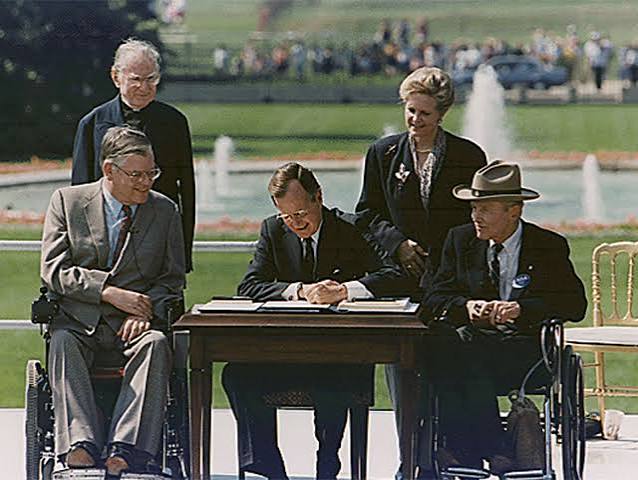
The Americans with Disabilities Act is a civil rights law that prohibits disability discrimination and requires reasonable accommodations in employment, public services, and places that serve the public. Related laws extend similar protection to schools and testing.
Under the ADA, a disability is a physical or mental impairment that substantially limits a major life activity, compared with most people. Concentrating, reading, learning, and thinking are all major life activities. The question is not whether something is hard for you, but whether it is substantially limiting and documented.
Why the documentation is the whole request
An employer, a testing agency, or a program does not grant accommodations on request. It grants them when documentation establishes an ADA disability and a clear functional limitation.
A standardized, performance-based evaluation turns a lived difficulty into measured evidence against that standard. Research on testing accommodations shows the aim is to remove a disability-related barrier without an unfair advantage, and rigorous documentation is what justifies the accommodation (Sireci, Scarpati, and Li, 2005).
What a strong ADA evaluation includes
A detailed history establishing a long-standing pattern, which matters for an adult disability claim.
Cognitive and attention testing with standardized, performance-based measures.
Academic or functional testing relevant to the accommodation you are seeking.
A written report that names the diagnosis, documents the functional limitations against the ADA standard, and recommends specific accommodations for your setting.
One evaluation, many settings
The strength of an ADA-standard evaluation is that it travels. The same report can support a request at work, on a professional exam, or in a program, because they all rest on the same underlying question of a documented disability.
If you already know your specific setting, we also have focused guides for exam accommodations and for workplace accommodations that walk through those exact processes.
How to start
- Book the evaluation. No waitlist means we schedule quickly. Tell us where you plan to use the documentation.
- Complete the assessment. Interview plus the standardized testing your situation calls for.
- Receive the report. Built to the ADA standard for your setting.
Here is how our part of the timeline works. There is no waitlist, so we can get started quickly. The interview and testing are typically completed on two separate days within a week, and often on the same day. After testing wraps, you receive your written report within four weeks of testing completion. If you need an expedited timeline, reach out and we will try to accommodate.
To be clear, the evaluation is an honest assessment and not a guaranteed diagnosis or a guaranteed approval. The testing body always makes the final call on accommodations. What we control is a thorough, standards-matched report that gives your request its best footing.
FAQ
What counts as a disability under the ADA?
A physical or mental impairment that substantially limits a major life activity compared with most people. That includes activities like concentrating, reading, learning, and thinking. Our evaluation documents whether that standard is met and how.
Do I need a prior diagnosis?
No. Many people are evaluated for the first time as adults, when an accommodation need arises. What matters is a current, comprehensive evaluation, which is what we provide.
Can one evaluation cover work and a licensing exam?
Often yes. Because both rest on documenting an ADA disability, a single thorough report can support requests in more than one setting, though each entity makes its own decision.
How long does the evaluation take?
The interview and testing are typically completed on two separate days within a week, and often the same day. You receive the written report within four weeks of testing completion. There is no waitlist, and expedited timelines are available on request.
Can you guarantee my accommodation is approved?
No, because the employer, agency, or program makes the final decision. What we provide is a thorough, honest evaluation written to the ADA standard, which is the strongest footing for the request.
Ready to get ADA-standard documentation? Check availability or call us at 734-333-7016. Tell us where you plan to use it and we will map the next steps. No waitlist, and real answers.
Disclaimer: This page is general information, not legal or medical advice, and not a guarantee that accommodations will be approved. Accommodation decisions rest with the testing body or employer, and any diagnosis comes from a licensed clinician after a comprehensive evaluation.
References
Sireci, S. G., Scarpati, S. E., and Li, S. (2005). Test accommodations for students with disabilities: An analysis of the interaction hypothesis. Review of Educational Research, 75(4), 457-490. https://doi.org/10.3102/00346543075004457
Process details reflect the Americans with Disabilities Act. Each employer, agency, or program applies its own documentation guidelines, so confirm requirements with the entity you are requesting from.